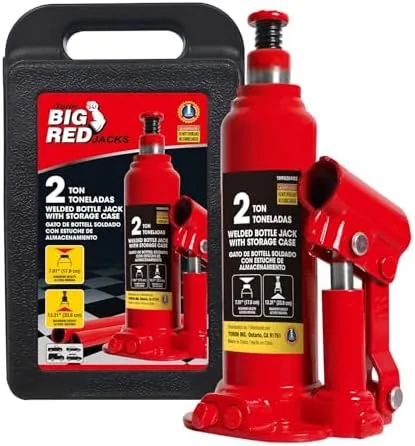
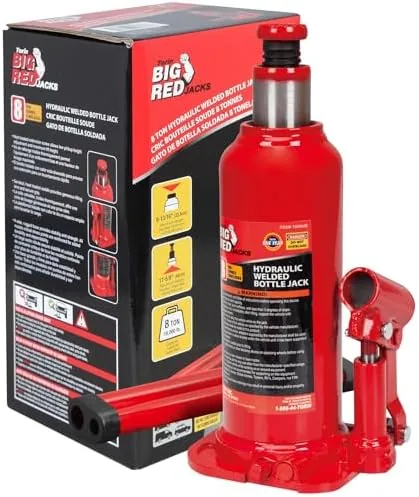
BIG RED — Bottle Jack
BIG RED Bottle Jack: Built for the Hands That Keep America Moving
Since 1968, BIG RED has served the professionals and DIY enthusiasts who refuse to compromise on safety or performance. Operating from Ontario, California, the company has dedicated over five decades to one mission: becoming the number one car jack manufacturer in the industry by delivering the highest quality products backed by exceptional service. Every BIG RED Bottle Jack reflects this commitment, engineered specifically for the mechanics, technicians, and home garage warriors who demand reliability under pressure.
The target audience spans a wide spectrum of automotive professionals and enthusiasts. Professional automotive technicians rely on these hydraulic jacks daily in busy shop environments where downtime costs money. Auto body shop owners trust the brand's consistent performance when working on everything from compact sedans to heavy-duty trucks. DIY home mechanics appreciate the same professional-grade engineering at accessible price points, bringing shop-quality lifting power into residential garages.
What unites this diverse user base is a shared need for equipment that performs flawlessly every single time. Whether lifting vehicles for routine oil changes, supporting heavy frames during suspension work, or raising cars for tire rotations and brake repairs, BIG RED users require tools that deliver without hesitation. The brand's over-engineered hydraulic systems — featuring aircraft-quality components designed to handle 600-800% more than rated capacity — provide exactly that level of confidence.
From 2-Ton Portability to 50-Ton Industrial Power
The complete product lineup spans an impressive range of lifting capacities designed to match virtually any application. Starting with the compact 2-ton model perfect for passenger vehicles and light-duty tasks, the collection scales all the way up to the massive 50-ton ultra-duty jack capable of supporting commercial equipment and industrial machinery. This breadth ensures that whether you're changing oil in a Honda Civic or servicing a construction vehicle, there's a precisely matched solution available.
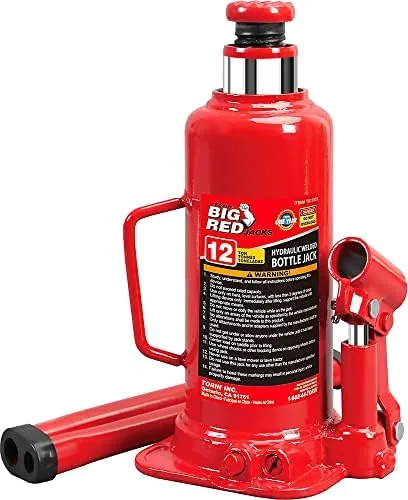
Mid-range options prove particularly popular among professional shops and serious home mechanics. The 8-ton, 10-ton, and 12-ton models handle the majority of trucks, SUVs, and light commercial vehicles that roll through automotive service bays daily. Each capacity tier maintains the same fundamental engineering principles and quality standards, simply scaled appropriately for different weight requirements.
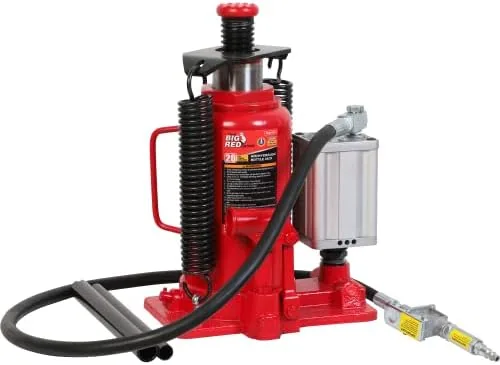
Specialty configurations expand the lineup even further. The pneumatic quick-lift model combines hydraulic power with air-assisted operation for faster cycling in high-volume environments. Low-profile stubby versions deliver full lifting power while fitting into tighter spaces where standard-height jacks cannot access. This comprehensive approach means professionals can standardize on a single brand across their entire operation while matching each tool precisely to its intended task.
Over-Engineering as Standard Operating Procedure
The engineering philosophy driving every hydraulic jack begins with a simple premise: exceed expectations by a massive margin. While competitors design to meet minimum standards, the Ontario-based engineering team builds systems capable of handling 600-800% more than their rated capacity. This over-engineering approach transforms every jack from a tool that merely works into equipment that provides genuine peace of mind during critical lifting operations.
Aircraft-quality components form the foundation of this philosophy. The same materials and manufacturing standards applied to aviation equipment — where failure is not an option — translate directly into the hydraulic systems powering each jack. Wire ropes, seals, pistons, and valves all meet specifications far exceeding what typical automotive applications require. This aerospace-inspired approach originated from the founders' belief that the margin between rated capacity and actual failure point should never be narrow.
Drop forged alloyed steel construction represents another cornerstone of the design approach. Unlike cast components that can contain hidden imperfections, drop forging produces denser, stronger metal with superior grain structure. Combined with welded construction that creates leak-free assemblies, this manufacturing methodology produces jacks that remain reliable through years of demanding professional use. The chromium-plated piston rods resist corrosion and maintain smooth operation even in harsh shop environments.
Built-in safety devices complete the engineering picture. Every jack incorporates safety valves that prevent overloading, automatically protecting both the equipment and the user from exceeding safe operating parameters. These are not afterthought additions but integral components designed into the hydraulic system from the ground up.
BIG RED Bottle Jack Features That Define Professional Performance
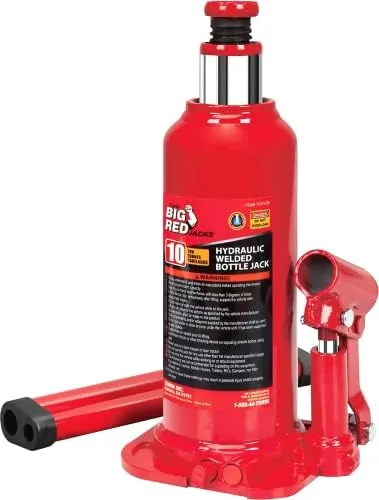
- Heat-Treated Serrated Saddle The contact surface features a generous lifting area with serrated texture, providing secure grip that prevents slippage during lifting operations. Heat treatment hardens the saddle to resist deformation under heavy loads.
- Inner/Outer Welded Structure Dual-weld construction creates completely leak-free hydraulic chambers, eliminating fluid loss that degrades performance over time. This sealed system maintains consistent lifting power throughout the jack's service life.
- Adjustable Screw Extension The threaded extension rod allows precise height adjustment to accommodate different vehicle lift points, maximizing the effective working range and ensuring proper contact with various chassis configurations.
- Powder-Coated Lead-Free Finish The protective coating resists oil, grease, and dirt while meeting environmental standards with its lead-free formulation. Easy cleanup keeps the jack looking professional and prevents corrosion.
- ANSI/PALD Standard Compliance Every unit meets or exceeds American National Standards Institute requirements for portable automotive lifting devices, ensuring regulatory compliance and verified safety performance.
- Compact Vertical Design The bottle configuration maximizes lifting power in a minimal footprint, fitting into tight spaces where floor jacks cannot operate while remaining easily portable between work stations.
Workshop Favorites Trusted by Professionals Daily
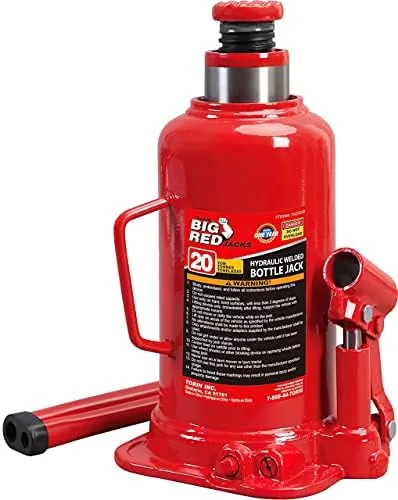
The T91003B 10-ton model has earned its place as a workshop essential across countless professional garages. Rated at 20,000 pounds of lifting capacity, this jack handles full-size trucks, SUVs, and most commercial vehicles encountered in general automotive service. The combination of serious lifting power with compact dimensions makes it versatile enough for both heavy-duty tasks and lighter vehicles when extra margin is desired.
For home mechanics seeking professional capability with added convenience, the 2-ton T90213 with included carrying storage case offers exceptional value. The drop forged alloyed steel construction delivers durability that rivals more expensive options, while the protective case keeps the jack organized and ready for roadside emergencies. This model excels for passenger car maintenance where its 4,000-pound capacity provides ample margin for sedans and small SUVs.
The 20-ton pneumatic quick-lift model represents the pinnacle of the lineup for high-volume operations. Combining a massive 40,000-pound capacity with air-assisted operation, this jack dramatically reduces cycling time in busy shops where minutes translate directly to revenue. The aluminum alloy pump contributes to longer lifespan under intensive use while the extended lifting range from 10-7/16 inches to 20-1/16 inches accommodates an exceptional variety of vehicles and equipment.
Drop Forged Steel, Chrome Plating & Welded Hydraulics
Drop forging represents the premium method for producing the structural components bearing the heaviest loads. This process forces heated steel alloy into precision dies under tremendous pressure, creating parts with superior strength compared to casting or machining from bar stock. The resulting grain structure follows the contours of the part rather than being randomly oriented, dramatically improving fatigue resistance and load-bearing capability.
Chromium plating on the piston rods serves multiple critical functions. The hard chrome surface resists scratching and scoring that would damage hydraulic seals, maintaining leak-free operation over thousands of lifting cycles. Corrosion resistance proves equally important in shop environments where exposure to brake fluid, transmission fluid, and moisture would quickly degrade unprotected steel. The smooth chrome finish also reduces friction, allowing smoother pump action and easier lifting.
The welded hydraulic cylinder construction eliminates the potential failure point created by threaded connections or press-fitted assemblies. Inner and outer welds create redundant sealing that contains hydraulic fluid under extreme pressure while preventing air intrusion that would cause spongy, unreliable lifting. This fully welded approach contributes significantly to the leak-free performance that professionals depend on daily.
Heavy-duty steel forms the structural framework supporting all other components. From the base plate distributing load across floor surfaces to the pump housing containing the hydraulic mechanism, consistent use of appropriate steel grades ensures dimensional stability under load. Combined with the powder-coat finish protecting against environmental degradation, these material choices produce jacks that withstand years of demanding professional use.
Lifting Confidence: Real Results in the Shop and Driveway
Performance under load reveals the true quality of any hydraulic jack, and the over-engineered approach delivers measurable results. The 600-800% safety margin above rated capacity means the hydraulic system operates well within its comfortable range during normal use, reducing component stress and extending service life. Users report consistent lifting behavior whether the jack is new or has logged thousands of cycles in professional service.
Durability across varied conditions distinguishes professional-grade equipment from consumer alternatives. The powder-coated finish resists the constant exposure to petroleum products, brake fluid, and shop chemicals that would degrade lesser coatings. Chromium-plated pistons maintain smooth operation without developing the pitting and corrosion that cause seal failure. Drop forged components resist the fatigue cracking that can develop in cast parts over years of repeated loading.
Practical comfort factors influence daily usability in meaningful ways. The generous saddle surface area distributes load effectively across vehicle contact points, reducing the risk of slippage or panel damage. Adjustable screw extensions dial in precise positioning without requiring blocks or adapters. The compact vertical footprint fits into wheel wells and tight engine compartment spaces where floor jacks simply cannot reach. These everyday conveniences accumulate into genuine time savings across hundreds of annual uses.
Getting Maximum Performance From Your BIG RED Bottle Jack
- Surface Preparation Position the jack on solid, level ground capable of supporting both the jack and vehicle weight. Concrete or asphalt provides ideal stability while soft ground, gravel, or sloped surfaces create dangerous tilting hazards.
- Lift Point Selection Always place the saddle against manufacturer-designated lift points on the vehicle frame or reinforced rocker panels. Never lift against body panels, suspension components, or areas not designed to bear concentrated loads.
- Extension Adjustment Thread the screw extension to achieve initial contact with the lift point before pumping. This maximizes available stroke for lifting and ensures proper saddle engagement before load transfer begins.
- Pumping Technique Use smooth, full strokes on the pump handle rather than rapid partial pumps. Complete cycles move more fluid per stroke and reduce wear on pump components while achieving faster overall lifting.
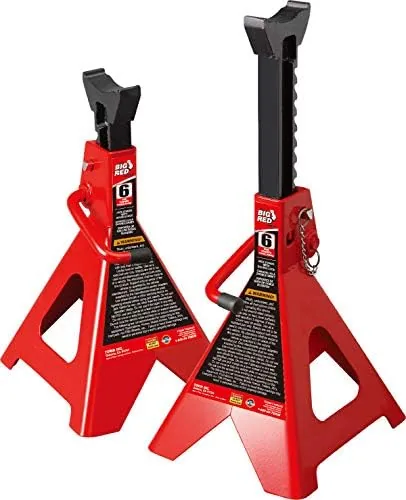
- Load Support Once desired height is reached, immediately position jack stands before working beneath the vehicle. Hydraulic jacks are lifting devices, not designed for sustained load support during service operations.
- Controlled Lowering Open the release valve slowly to control descent speed. Rapid release can cause dangerous drops while gradual lowering protects both the vehicle and jack components from shock loading.
Safe Operation Starts With Proper Capacity Selection
Selecting appropriate lifting capacity requires understanding how vehicle weight distributes across lift points. A vehicle's gross weight rarely transfers entirely to a single jack, as each lift point typically bears 25-35% of total weight depending on engine placement and load distribution. However, professional practice dictates choosing a jack with capacity exceeding the maximum anticipated single-point load by a comfortable margin.
Working height compatibility proves equally critical for safe operation. The jack's minimum height must fit beneath the vehicle's lift points with the suspension at rest, while maximum extended height must achieve adequate clearance for the intended work. Low-profile vehicles may require stubby configurations like the T91207A, while trucks with significant ground clearance work well with standard-height models.
Weight capacity ratings assume the jack operates on solid, level surfaces with proper lift point engagement. Soft ground that allows the base to sink, sloped surfaces creating side loads, or improper saddle placement against non-structural components all compromise the safety margins built into rated capacities. Understanding these limitations and respecting them consistently prevents accidents that rated capacity alone cannot protect against.
The Right Lift for Mobile Mechanics, Shop Owners & Weekend Warriors
Professional Users
- Automotive service technicians performing daily maintenance tasks
- Auto body shop owners requiring reliable heavy-vehicle support
- Mobile mechanics needing portable professional-grade equipment
- Fleet maintenance departments servicing commercial vehicles
- Agricultural equipment operators handling implements and machinery
DIY & Home Users
- Weekend mechanics performing oil changes and filter replacements
- Enthusiasts tackling brake jobs and rotor replacements
- Home garage owners maintaining family vehicles
- Off-road enthusiasts preparing for trail recovery situations
- RV owners requiring high-capacity portable lifting solutions
Matching the Right Bottle Jack to Your Vehicle and Tasks
Vehicle weight serves as the starting point for capacity selection, but the calculation requires more nuance than simply matching gross vehicle weight to jack capacity. Consider that most lifting situations place load on a single jack supporting one corner or one axle end. A 6,000-pound truck lifted at one rear corner might place only 1,500-2,000 pounds on that jack. However, professional practice recommends significant capacity margin, making a 4-ton or 6-ton jack appropriate for this example.
Height requirements narrow options further once capacity is established. Measure ground clearance at the intended lift points with the vehicle unladen and suspension at rest. The jack's minimum collapsed height must fit beneath this measurement with room for saddle extension adjustment. Maximum height should provide adequate working clearance for the intended tasks — oil changes need less height than suspension component removal.
Frequency and portability considerations influence model selection for practical daily use. A shop with permanently installed lifts might choose smaller, highly portable jacks for situations where lift access is inconvenient. Mobile service operations prioritize compact storage dimensions and carrying case availability. Home garage setups often benefit from mid-range capacity jacks versatile enough to handle both the family sedan and a full-size pickup truck.
Specialty applications may require specific configurations. The pneumatic quick-lift model suits high-volume environments where cycling speed affects productivity. Low-profile stubby variants serve sports cars and modified vehicles with minimal ground clearance. Ultra-duty options like the 50-ton T95007 address commercial, agricultural, and industrial lifting requirements exceeding typical automotive applications.
BIG RED Bottle Jack vs. Leading Competitors: Feature Comparison
| Feature | BIG RED | Pro-Lift | Powerbuilt |
|---|---|---|---|
| Safety Margin Above Rating | 600-800% over-engineered | Standard ANSI compliance | Standard ANSI compliance |
| Construction Method | Drop forged alloyed steel | Cast iron construction | Steel construction |
| Hydraulic Assembly | Inner/outer welded, leak-free | Standard gasket sealing | Single-weld construction |
| Piston Rod Treatment | Chromium plated | Painted steel | Chrome plated |
| Saddle Design | Heat-treated, serrated | Standard machined | Serrated surface |
| Finish Type | Powder coat, lead-free | Enamel paint | Powder coat |
| Component Quality | Aircraft-quality materials | Industrial grade | Commercial grade |
| Safety Valve | Integrated overload protection | Standard bypass valve | Integrated safety valve |
| Manufacturing Heritage | Since 1968, Ontario CA | Import manufacturing | Mixed sourcing |
| Capacity Range Available | 2 to 50 tons | 2 to 20 tons | 2 to 12 tons |
Comparison based on manufacturer specifications and published product information. Actual performance may vary based on model and application.
Maintaining Peak Hydraulic Performance Year After Year
- Regular Fluid Checks Inspect hydraulic fluid level monthly during active use. Low fluid causes spongy operation and reduced lifting capacity. Use only manufacturer-recommended hydraulic jack oil when topping off.
- Seal Inspection Examine the ram and release valve areas for evidence of fluid seepage. Minor weeping indicates seal wear that will worsen over time. Address leaks promptly to maintain safe operating capacity.
- Surface Cleaning The oil and grease-resistant powder coat finish wipes clean easily. Regular removal of shop contaminants prevents accumulation that could affect component movement or conceal developing problems.
- Extension Thread Lubrication Apply light machine oil to the screw extension threads periodically. Smooth adjustment prevents cross-threading and ensures precise height positioning when working under vehicles.
- Storage Position Store the jack fully lowered in a clean, dry location. Extended storage under load can damage seals and stress hydraulic components unnecessarily.
- Annual Professional Service Consider professional inspection and fluid replacement annually for jacks in commercial service. High-cycle equipment benefits from seal replacement and hydraulic system bleeding performed by qualified technicians.